Navigating Reproductive Healthcare Research: A Practical Guide to Evaluating Options Online
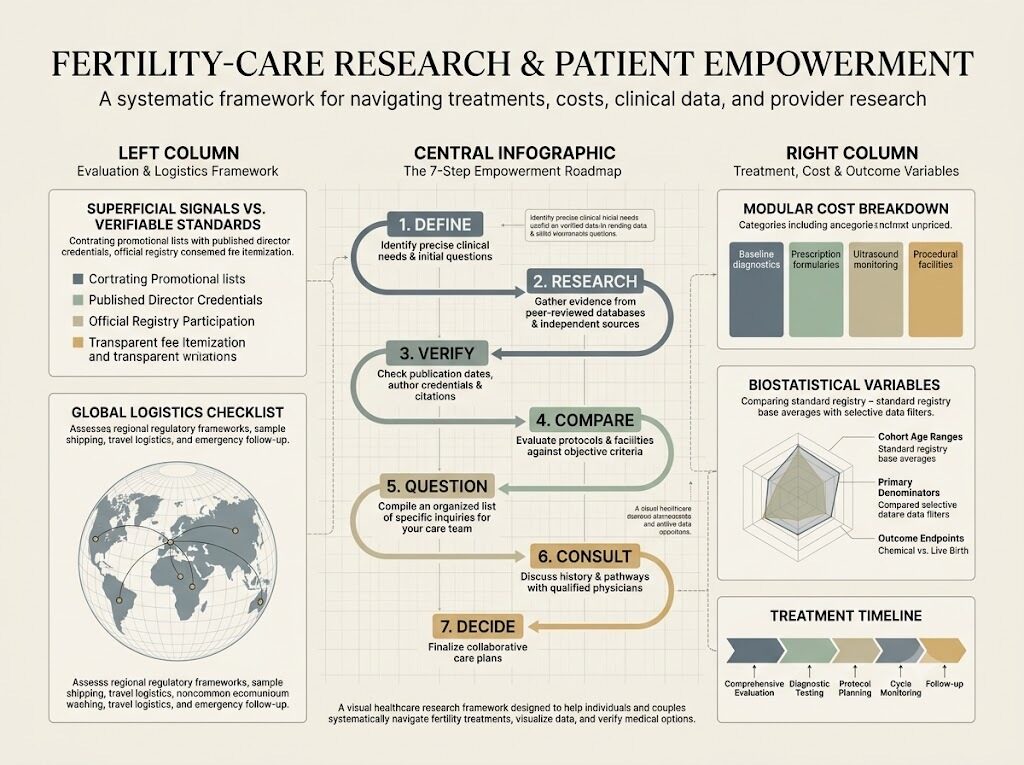
Researching reproductive healthcare online can feel like an immense undertaking. Between technical clinical terminology, diverse provider claims, wide cost estimates, and complex outcome data, gathering accurate information often creates more confusion than clarity. Many individuals and couples quickly find themselves navigating an overwhelming mix of scientific journals, marketing materials, patient forums, and regional healthcare directories.
An effective research process does not aim to replace professional medical guidance or diagnose underlying conditions. Instead, its purpose is to create an objective, organized framework of knowledge. By learning how to categorize information, evaluate sources, and identify essential questions ahead of time, patients can enter consultations with qualified fertility specialists feeling prepared, informed, and confident.
Navigating the Clinical Path
Before diving into granular details or specific facilities, it is beneficial to understand the foundational steps common to advanced reproductive medicine. A comprehensive journey rarely begins with immediate intervention; it usually starts with diagnostic assessments, hormonal evaluations, physical screenings, and medical history reviews for both partners or the individual seeking care.
When researching procedures like an IVF treatment, understanding the standard phases helps demystify the medical jargon. A typical pathway involves ovarian stimulation, careful monitoring through bloodwork and ultrasounds, egg retrieval, laboratory fertilization, embryo development, and eventual transfer. Gaining a general awareness of these steps allows patients to recognize where specific clinical recommendations fit into the broader process. This baseline understanding also makes it easier to draft targeted questions for a doctor, ensuring that initial medical appointments focus on individualized diagnostic interpretation rather than basic procedural definitions.
Deciphering Financial Structures and Variable Expenses
One of the most complex aspects of reproductive healthcare research is financial planning. Published pricing structures can vary dramatically between regions, facilities, and care plans. A headline figure quoted for an IVF treatment cost may only represent the basic physician and laboratory fees, omitting critical elements that are essential to completing a cycle.
To build an accurate financial picture, researchers should break down quotes into specific components:
Initial Consultations and Testing: Pre-treatment screenings, infectious disease panels, semen analysis, and diagnostic imaging.
Clinical Monitoring: Frequent ultrasound appointments and blood hormone assays performed during the stimulation phase.
Medications: Hormonal stimulation injections and supportive medications, which are frequently billed separately through specialty pharmacies.
Specialized Laboratory Work: Micromanipulation techniques, extended blastocyst culture, or genetic testing of embryos.
Anesthesia and Facility Fees: Procedural room charges and anesthesiologist services during retrieval.
Storage and Transfer Costs: Cryopreservation fees for extra embryos or gametes, along with subsequent frozen transfer cycles.
This distinction is especially crucial when reviewing an estimated IVF cost by country. While international options may present lower base fees for laboratory procedures, total out-of-pocket costs must account for travel, accommodation, currency exchange rates, local monitoring prior to departure, and potential frozen storage maintenance over time. Transparent documentation helps prevent unexpected expenses during care.
Interpreting Reported Outcome Data
Reviewing published success metrics is a common step during provider research, but it requires critical evaluation. It is easy to view IVF success rates as straightforward benchmarks or personal guarantees, but raw percentages rarely tell the complete story.
Published outcomes are shaped by numerous variables that are unique to each facility's patient population and reporting methodology:
Patient Age and Diagnosis: Centers that specialize in complex cases, diminished ovarian reserve, or recurrent implantation failure may report lower aggregate numbers simply because they treat higher-risk populations.
Reporting Metrics: Some centers report outcomes per initiated cycle, others per retrieval, and others per embryo transfer. A rate measured per transfer will appear higher than a rate measured per initiated cycle because it excludes cycles canceled due to poor response.
Single vs. Multiple Transfers: Facilities adhering strictly to elective single embryo transfer protocols prioritize maternal and infant safety, which affects statistical presentations compared to clinics that routinely transfer multiple embryos.
Outcome statistics are general population figures. They provide broad context regarding a laboratory's general capabilities, but they cannot predict an individual patient's medical result. That assessment must come directly from a reproductive endocrinologist evaluating specific clinical indicators.
Evaluating Healthcare Facilities Objectively
When compiling a list of prospective care centers, patients should look beyond visual branding, polished websites, or generic reviews. Reviewing independent
To effectively compare fertility clinics, consider assembling a structured evaluation checklist based on neutral criteria:
| Evaluation Factor | Key Considerations to Review |
| Laboratory Standards | Are laboratory accreditations clearly stated? Does the facility operate an on-site embryology laboratory with clean-room standards? |
| Clinical Transparency | Does the facility clearly outline what is included in standard packages versus optional add-on services? |
| Communication Protocols | Is care managed by a dedicated physician, or is it handled primarily by rotating nursing staff? How are urgent questions addressed during a cycle? |
| Data Verification | Are published statistics verified by independent national registries or professional regulatory bodies? |
| Scope of Services | Does the clinic support comprehensive diagnostics, preservation programs, and donor or gestational options internally? |
Using consistent parameters across all prospective facilities ensures that personal priorities—such as clear communication, location convenience, and technical proficiency—remain at the center of the evaluation.
Investigating Cross-Border Medical Options
Exploring medical care outside one’s home country is an increasingly common path for patients seeking specific legal frameworks, shorter wait times, or alternative cost models. However, individuals researching IVF abroad must account for logistical layers that do not exist with local care.
Key areas to investigate include:
Regulatory and Legal Frameworks: Reproductive laws vary significantly by jurisdiction. Rules governing gamete donation, anonymity, embryo testing, and legal parental rights differ from country to country.
Care Continuity: Effective cross-border treatment requires careful coordination between a local physician (who handles initial diagnostic testing and early ovarian stimulation monitoring) and the international team. Ensuring that your local doctor is willing to collaborate is essential.
Language and Communication: Confirm that written consents, medical records, and daily instructions will be delivered clearly in your preferred language without ambiguity.
Travel Flexibility: Clinical cycles depend on biological responses. Ovarian stimulation timelines can shift, meaning travel dates, lodging, and return flights must accommodate unexpected adjustments.
Post-Transfer Care: Planning who will manage early pregnancy monitoring, hormonal support, or potential complications once you return home is critical before initiating travel.
Exploring Reproductive Technologies
Modern reproductive medicine encompasses a broad spectrum of interventions tailored to varied biological circumstances. During early research, individuals encounter a wide range of fertility treatment options, spanning from conservative medical therapies to advanced laboratory techniques.
For example, egg freezing (oocyte cryopreservation) has become a widely utilized method for individuals seeking to preserve biological options for the future due to personal, social, or medical reasons, such as upcoming oncological treatments. Understanding the timeline, hormonal regimens, and vitrification technologies involved allows individuals to prepare focused questions regarding egg quality, ideal retrieval age ranges, and long-term storage viability.
Similarly, specialized procedures such as an ICSI treatment (intracytoplasmic sperm injection) are frequently discussed in the context of male-factor subfertility, fertilization challenges in prior cycles, or when working with cryopreserved gametes. Understanding what these specific interventions entail helps patients understand why a physician might recommend or advise against a particular laboratory technique based on diagnostic findings.
Assessing the Credibility of Digital Information
Not all healthcare information found on the internet carries the same editorial weight. Because reproductive medicine is an emotionally charged and commercially competitive field, maintaining high standards for source verification is vital.
When evaluating an article, guide, or directory, look for clear trust markers:
Attribution and Credentials: Is the content authored or reviewed by clinical professionals or experienced medical writers? Are primary clinical guidelines cited?
Editorial Independence: Does the platform distinguish clearly between objective educational guides and paid promotional listings?
Publication Dates: Reproductive technologies, protocols, and regulatory guidelines evolve regularly. Always verify that informational resources reflect current clinical practices.
Balanced Tone: Reliable resources present both advantages and limitations of procedures neutrally, avoiding sensational claims, absolute promises, or high-pressure calls to action.
A Structured Research Workflow
To keep the research phase productive without feeling consumed by data, follow this straightforward six-step progression:
Define: Clarify your primary research goals (e.g., understanding a specific procedure, estimating comprehensive budgets, or finding regional facilities).
Research: Gather baseline procedural overviews and regulatory information from authoritative, non-promotional educational sources.
Verify: Cross-reference costs, technological claims, and outcome reports against professional medical guidelines or independent registries.
Compare: Use standardized checklists to evaluate clinics, packages, or regional considerations side by side.
Question: Compile an organized list of specific inquiries regarding diagnostic requirements, timelines, risks, and pricing inclusions.
Discuss: Bring your documented notes directly to a board-certified reproductive specialist to receive personalized clinical guidance.
Using Independent Educational Platforms
Navigating these research phases is significantly easier when using structured, objective resources. Independent platforms like IVFHospitalsNow.com serve as helpful educational starting points, providing balanced overviews of treatment pathways, general cost breakdowns, facility profiles, and regional healthcare contexts in a single organized directory. Because independent platforms focus on research and provider discovery rather than clinical provision, they offer an unpressured environment where readers can gather neutral data at their own pace.
Approaching reproductive healthcare research methodically transforms an overwhelming amount of information into a manageable, empowering roadmap. By focusing on transparent data, verifiable facts, and structured questions, you can navigate your options with clarity and collaborate effectively with your future healthcare team.